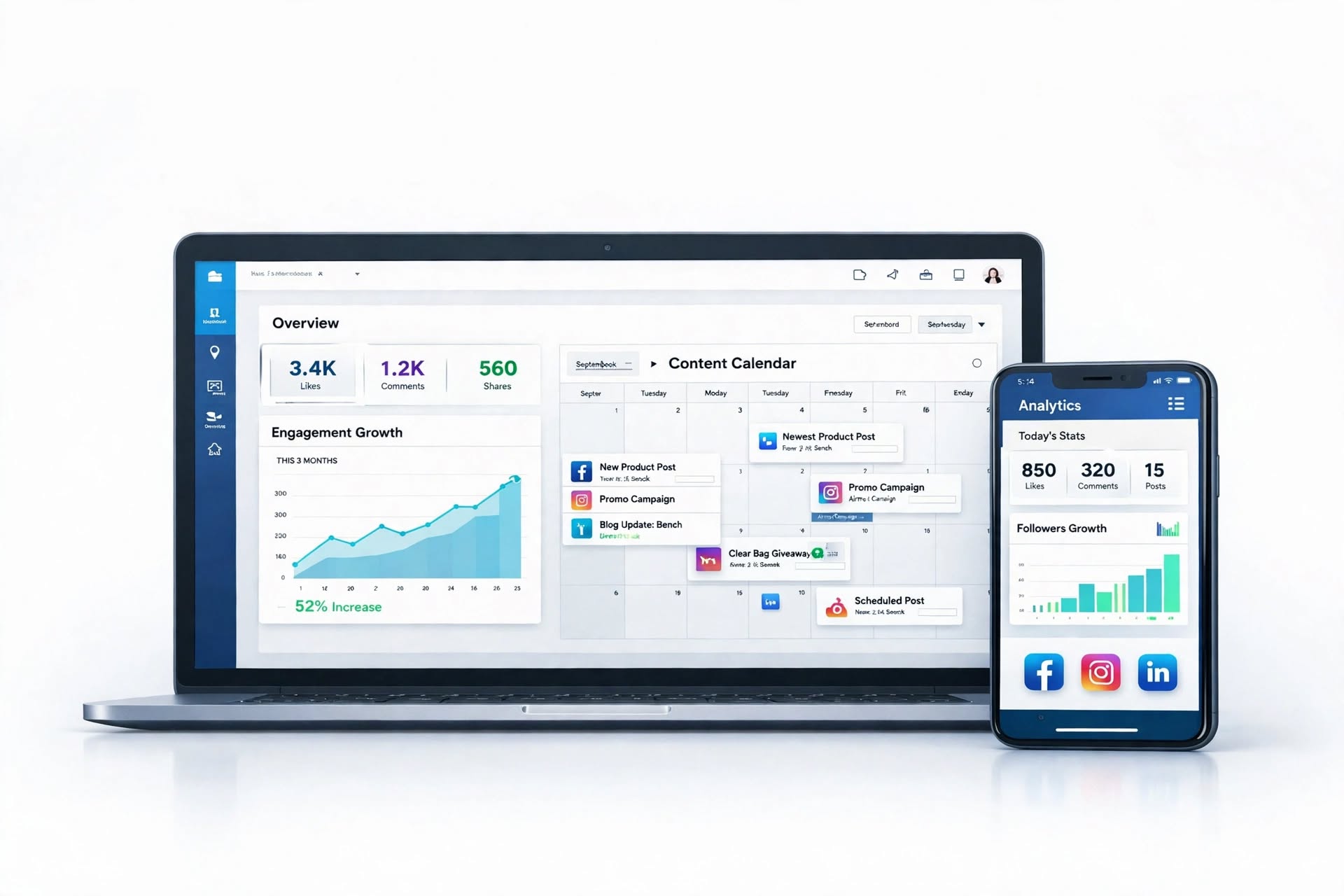
What Are Social Media Marketing Services? A Complete Guide for Businesses
What Are Social Media Marketing Services? A Complete Guide for Businesses
Introduction
Social media has become an essential communication and marketing channel for businesses of all sizes. From small online stores to established brands, businesses use social platforms to connect with audiences, share information, promote products, and build lasting customer relationships.
However, effective social media marketing involves more than publishing occasional posts. Businesses may need content creation, campaign planning, audience research, analytics, advertising, and other services to support their marketing goals.
This is where social media marketing services can help.
In this guide, we will explain what social media marketing services are, explore the different types available, discuss their potential benefits, and help you understand how to choose services that fit your business needs.
What Are Social Media Marketing Services?
Social media marketing services are activities, tools, or solutions that help businesses and creators manage, promote, and improve their presence on social media platforms.
These services can include professional marketing support, content creation, advertising management, analytics, social media strategy, and access to certain platform-related promotional services.
The exact services available depend on the provider.
Some businesses work with a digital marketing agency or freelancer for complete campaign management. Others manage their own accounts and use specialized tools or service platforms to support specific tasks.
The right choice depends on your objectives, budget, available skills, and the amount of support your business requires.
Why Are Social Media Marketing Services Important?
Social media marketing can help businesses communicate with customers and promote their offerings, but managing it effectively takes time and planning.
Suitable services may help businesses organize their marketing activities, improve their content strategy, and understand how audiences respond to their campaigns.
Potential benefits include:
1. Improved Brand Awareness
Consistent and relevant content can introduce your business to people who may not know about your products or services.
2. Better Audience Communication
Social media provides opportunities to answer questions, respond to feedback, and share useful information with potential customers.
3. More Organized Marketing Activities
Planning tools, content services, and campaign management solutions can help businesses organize their workflows.
4. Data-Informed Decisions
Analytics services and platform insights can help marketers understand which content and campaigns support their objectives.
5. Support for Business Goals
Depending on the service, social media marketing may support website traffic, lead generation, product discovery, or sales.
These benefits are not automatic. Outcomes depend on the service, business strategy, audience, execution, and other factors.
Types of Social Media Marketing Services
Social media marketing includes several categories of services. Understanding the differences can help you identify what your business actually needs.
1. Social Media Strategy and Planning
Strategy services focus on defining marketing objectives, identifying target audiences, selecting appropriate platforms, and developing a content plan.
A clear strategy helps businesses prioritize activities instead of posting without a specific purpose.
This type of service may be useful for businesses that are starting from scratch or struggling to organize their marketing efforts.
2. Content Creation Services
Content creation services may include designing graphics, writing captions, producing videos, preparing carousels, and developing other social media assets.
Quality content should reflect the brand's identity and provide value to its intended audience.
Before selecting a provider, review examples of its work and confirm that you have the necessary rights to use the delivered materials.
3. Social Media Management
Social media management can involve scheduling posts, maintaining content calendars, responding to comments, organizing messages, and monitoring account activity.
The exact responsibilities depend on the agreement with the service provider.
Businesses should clarify which platforms are included, how frequently content will be published, and what level of customer communication is covered.
4. Social Media Advertising
Advertising services help businesses plan, launch, and manage paid campaigns on supported platforms.
Depending on the platform and campaign objective, advertising may support brand awareness, website visits, lead generation, or sales.
Professional advertising support may include audience research, creative testing, campaign setup, budget management, and performance reporting.
Paid campaigns require careful monitoring. Advertising does not guarantee sales, leads, or a positive return on investment.
5. Analytics and Performance Reporting
Analytics services help businesses understand how their social media content and campaigns perform.
Reports may include relevant metrics such as reach, impressions, engagement, link clicks, conversions, and advertising expenditure.
The most useful metrics depend on the marketing objective. A business focused on sales should evaluate meaningful conversions rather than relying only on likes or views.
6. Influencer Marketing
Influencer marketing involves collaborating with creators who have audiences relevant to a brand.
Potential activities include sponsored content, product demonstrations, reviews, and other agreed promotional collaborations.
Businesses should evaluate audience relevance, content quality, authenticity, campaign terms, and applicable disclosure requirements before entering a partnership.
7. Social Media Promotional Services
Some providers offer specific social media-related services through online dashboards or centralized ordering systems.
An SMM panel is one example of a platform that allows users to browse and order supported services through a single interface.
Available services, requirements, delivery estimates, and limitations vary between providers.
Before ordering, review the service description and applicable social platform policies. Artificial engagement or prohibited automation may violate platform rules and may not produce meaningful business outcomes.
What Is an SMM Panel, and How Does It Fit In?
An SMM panel, short for Social Media Marketing panel, is an online platform that provides a centralized interface for browsing and ordering certain social media-related services.
Instead of managing each order through a separate provider, users may be able to review service options, compare listed prices, submit orders, and monitor progress through a dashboard.
An SMM panel is different from a full-service digital marketing agency.
A marketing agency may provide strategy, creative production, campaign management, and reporting. An SMM panel generally focuses on access to listed services and order management, although features differ by provider.
Neither option automatically guarantees business growth.
When evaluating an SMM panel, consider service transparency, pricing, support, refund policies, privacy practices, and compliance with the relevant social media platform's rules.
How to Choose the Right Social Media Marketing Services
Choosing the right services starts with understanding your goals.
1. Define Your Business Objective
Decide whether you want to improve brand awareness, publish better content, attract relevant website visitors, generate leads, or support sales.
Different goals require different services.
2. Understand Your Target Audience
Identify your customers' interests, questions, needs, and preferred platforms.
A service is more likely to be useful when it supports a clearly defined audience and marketing objective.
3. Compare Service Details
Read the description of each service carefully.
Check what is included, what information is required, the estimated delivery time, and any restrictions or limitations.
4. Review Pricing and Budget
Compare the total cost rather than choosing an option based only on its advertised price.
Consider whether the service fits your available budget and whether you can measure its value.
5. Check Customer Support
Look for clear support channels and understandable procedures for handling questions, payment issues, and order problems.
Do not assume that support is available around the clock unless the provider confirms it.
6. Protect Your Privacy and Security
Never share account passwords, one-time verification codes, or recovery credentials with a service provider.
Review the provider's privacy practices and be cautious about unnecessary account permissions.
7. Check Platform Policies
Review the rules of the social network involved before using a third-party service.
Avoid activities that violate platform policies or create unnecessary risks for your accounts.
8. Set Realistic Expectations
No legitimate service can guarantee viral reach, permanent engagement, a specific number of sales, or long-term growth in every situation.
Evaluate services according to their actual scope and your business objectives.
Organic Marketing vs. Paid Social Media Services
Organic and paid social media marketing serve different purposes.
Organic marketing focuses on publishing useful content, engaging with audiences, maintaining a recognizable brand presence, and building relationships over time.
Paid social media marketing involves paying a platform to distribute advertising content to selected audiences.
Organic activities can help establish a strong foundation, while paid campaigns may provide additional distribution for specific objectives.
Many businesses use a combination of both approaches.
For example, a business might publish educational posts organically and use a paid campaign to promote a relevant product or landing page.
The best balance depends on the audience, marketing objective, available resources, and performance data.
How Small Businesses Can Get Started
Small businesses do not need to use every available service at once.
A practical starting process includes the following steps:
Step 1: Optimize Your Social Profiles
Ensure your business name, description, contact information, and website link are accurate.
Step 2: Create a Simple Content Plan
Prepare useful posts that introduce your business, answer customer questions, and explain your products or services.
Step 3: Choose the Most Relevant Platform
Focus on the social networks that best match your target audience and content format.
Step 4: Track Performance
Review available analytics to understand which posts attract relevant interactions and which activities support your objectives.
Step 5: Identify Your Biggest Challenge
Determine whether you need help with content creation, campaign management, analytics, or another specific task.
Step 6: Evaluate Suitable Services
Compare providers, review their terms, and choose services that address your actual needs.
Step 7: Improve Gradually
Review your results and adjust your strategy before expanding your spending or adding more services.
This approach helps businesses prioritize their resources and avoid unnecessary expenses.
Common Mistakes to Avoid
Choosing Services Without a Clear Goal
A service may sound attractive but still be unsuitable for your business. Define your objective before spending money.
Focusing Only on Price
Low prices do not automatically indicate good value. Review the service details, limitations, and support arrangements.
Expecting Guaranteed Results
Social media performance depends on many factors. Be cautious of unrealistic promises.
Ignoring Content Quality
Tools and services cannot fully replace relevant content, a clear message, and a good customer experience.
Neglecting Analytics
Without reviewing results, it becomes difficult to understand whether your marketing activities are useful.
Ignoring Account Security
Protect your credentials and avoid giving unnecessary access to third parties.
Overlooking Platform Policies
Check whether the service and your intended use comply with the relevant platform's rules.
Frequently Asked Questions
What are social media marketing services?
They are activities, tools, or solutions that help businesses manage, promote, and improve their presence on social platforms. Examples include content creation, advertising, management, analytics, and selected promotional services.
Which social media marketing services does a small business need?
The right services depend on the business's goals, audience, budget, and existing capabilities. Many small businesses begin with profile optimization, useful content, and basic performance tracking.
Is an SMM panel the same as a digital marketing agency?
No. An SMM panel generally provides a centralized interface for ordering listed services, while an agency may offer broader strategy, creative work, campaign management, and reporting.
Can social media marketing services guarantee sales?
No. Sales depend on factors such as customer needs, product quality, pricing, competition, audience relevance, and the purchasing experience.
Are paid social media services worth the cost?
They may be worthwhile when the service supports a clear objective and its results can be evaluated. Compare the cost with the actual value delivered rather than relying on promotional claims.
How do I choose a reliable service provider?
Review service descriptions, pricing, support channels, refund terms, privacy practices, and applicable platform policies. Make an informed decision based on your specific requirements.
Can social media marketing help a new business?
Yes. Social media can help a new business introduce its products, communicate with potential customers, share useful information, and build brand awareness. Results vary according to the strategy and execution.
Conclusion
Social media marketing services can help businesses organize their marketing activities, create useful content, manage campaigns, and better understand their audiences.
The right choice depends on your objectives, budget, target audience, and the specific support your business requires.
Start by identifying your biggest marketing challenge. Compare available services carefully, protect your accounts, follow platform policies, and evaluate results against realistic goals.
At SMMMarkets, our goal is to help users explore social media marketing services and make informed decisions. Browse the available options, read service descriptions carefully, and choose solutions that align with your needs.
For long-term progress, combine appropriate tools and services with valuable content, genuine audience relationships, and a clear marketing strategy.