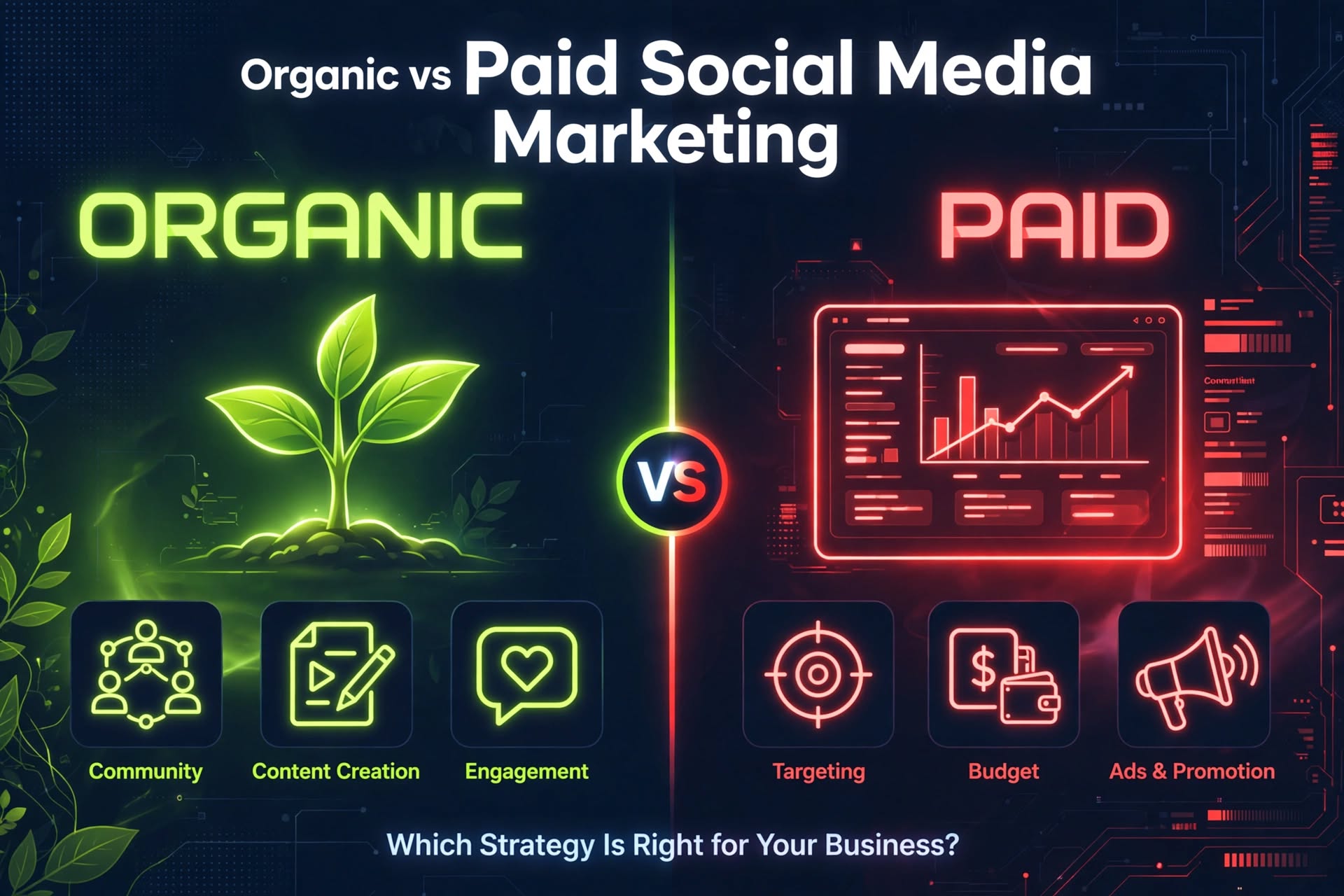
Organic vs. Paid Social Media Marketing: Which Strategy Is Right for Your Business?
Organic vs. Paid Social Media Marketing: Which Strategy Is Right for Your Business?
Introduction
Social media marketing has become an important part of growing a business online. Platforms such as Facebook, Instagram, YouTube, TikTok, and LinkedIn give businesses opportunities to connect with audiences, promote products, share useful information, and build brand awareness.
However, not every business uses social media in the same way. Some focus on organic content, while others invest in paid advertising. Many businesses combine both approaches to support their marketing goals.
So, what is the difference between organic and paid social media marketing? Which approach is better for your business?
In this guide, we will explain how both strategies work, compare their advantages and limitations, and show you how to choose an approach that fits your goals and budget.
What Is Organic Social Media Marketing?
Organic social media marketing involves publishing content and interacting with audiences without paying directly to distribute each post through advertising.
Common examples include:
- Publishing regular social media posts.
- Creating educational videos and Reels.
- Sharing Stories and behind-the-scenes content.
- Responding to comments and messages.
- Participating in relevant conversations.
- Building a community around your brand.
- Sharing useful information about your products or services.
The main purpose of organic marketing is to develop a recognizable presence, build relationships, and provide value to your audience over time.
For example, a clothing business might publish styling ideas, product care tips, and new collection updates. A digital marketing agency might share tutorials about SEO, advertising, and content creation.
Organic marketing can be started with a relatively small budget, although it still requires time, planning, creative work, and consistent effort.
Advantages of Organic Social Media Marketing
1. Builds Brand Identity
Regular, relevant content helps audiences understand your business, products, values, and expertise.
2. Encourages Genuine Engagement
Useful content can encourage people to ask questions, share experiences, and participate in conversations with your brand.
3. Supports Long-Term Relationships
Consistent communication can help you develop trust with your audience over time.
4. Provides Opportunities to Learn
Comments, questions, shares, and other interactions can reveal what your audience finds helpful.
5. Offers a Lower Advertising Entry Cost
You can publish organic content without paying for every impression. However, content production and management still require resources.
Limitations of Organic Social Media Marketing
Organic reach is not guaranteed. Your content may reach only a portion of your existing audience, and visibility can change according to platform algorithms, competition, content relevance, and viewer behavior.
Building an audience can also take time. Businesses that need immediate exposure may find organic content alone insufficient for their short-term objectives.
What Is Paid Social Media Marketing?
Paid social media marketing involves paying a platform to distribute advertising content to selected audiences.
Businesses commonly use advertising tools offered by platforms such as Meta, YouTube, TikTok, and LinkedIn, depending on their objectives and eligibility.
Paid campaigns may focus on:
- Increasing awareness of a brand.
- Reaching relevant potential customers.
- Promoting products or services.
- Driving website traffic.
- Generating leads.
- Encouraging purchases or other conversions.
For example, an online store might run an Instagram or Facebook advertising campaign to introduce a new product to people who may be interested in it.
Paid marketing provides more control over campaign budgets, audience settings, placements, and optimization options, although the available features differ across platforms.
Advantages of Paid Social Media Marketing
1. Potentially Faster Exposure
Advertising can introduce your content to audiences beyond your existing followers while the campaign is active.
2. Audience Targeting Options
Depending on the platform, you may be able to select audiences using location, interests, demographics, or other permitted targeting options.
3. Budget Control
Many advertising platforms allow businesses to set campaign budgets and adjust spending based on performance.
4. Measurable Campaign Performance
Advertising dashboards can provide information about impressions, clicks, conversions, and other metrics, depending on the campaign setup.
5. Support for Specific Business Objectives
Paid campaigns can be designed around objectives such as website visits, qualified leads, or purchases.
Limitations of Paid Social Media Marketing
Paid advertising requires financial investment, and results are not guaranteed. Campaigns may generate impressions or clicks without producing sales.
Performance depends on factors such as the offer, audience, creative quality, competition, landing page, pricing, and campaign configuration.
Businesses must also monitor spending, evaluate performance, and follow advertising policies. Increasing the budget without understanding the results can waste money.
Organic vs. Paid Social Media Marketing: Key Differences
Although both approaches support social media marketing, they differ in several important ways.
1. Cost
Organic marketing does not require direct payment for each post's distribution, but content creation and management still have costs.
Paid marketing requires an advertising budget in addition to the resources needed to prepare and manage campaigns.
2. Reach
Organic reach depends on factors such as audience interest, platform distribution, and content performance.
Paid campaigns can provide additional distribution through advertising placements, subject to platform rules, campaign settings, and available inventory.
3. Speed
Organic marketing often requires consistent effort before a business develops meaningful visibility.
Paid advertising can deliver exposure while a campaign runs, but profitable or meaningful outcomes may still take testing and optimization.
4. Audience Relationships
Organic content provides opportunities to build ongoing conversations and a recognizable brand presence.
Paid advertising can introduce a business to new audiences, but the business still needs useful content, a relevant offer, and a good customer experience to build lasting relationships.
5. Measurement
Organic analytics can help you understand content performance and audience interactions.
Paid advertising dashboards provide additional campaign-level metrics, including delivery and conversion data when tracking is correctly configured.
Both approaches benefit from clear objectives and regular performance reviews.
Which Strategy Is Better for Small Businesses?
There is no single answer for every business. The right strategy depends on your available budget, business model, audience, and objectives.
When Organic Marketing May Be a Good Starting Point
Consider prioritizing organic content if:
- Your advertising budget is limited.
- You are still learning about your target audience.
- You want to establish your brand identity.
- You can consistently create useful content.
- You want to answer common customer questions.
- You need to understand which topics interest your audience.
A new business can begin by optimizing its social media profiles, publishing helpful posts, responding to questions, and reviewing engagement.
When Paid Advertising May Be Useful
Consider paid campaigns if:
- You have a clearly defined marketing objective.
- Your product or service is ready to promote.
- You have identified an appropriate target audience.
- You can afford to test advertising without risking essential business expenses.
- Your website or landing page provides a clear customer experience.
- You can measure relevant outcomes.
Paid advertising should be treated as an investment to evaluate, not a guarantee of revenue.
Why Combining Organic and Paid Marketing Can Work
For many businesses, combining organic and paid strategies provides a practical approach.
Organic content helps establish your brand, answer questions, demonstrate expertise, and maintain a consistent presence. Paid campaigns can help distribute selected messages to relevant audiences.
For example, a digital marketing agency could publish educational posts about common advertising mistakes. After identifying a useful topic, it might promote a relevant resource through a permitted advertising campaign.
An online store could share product demonstrations and customer FAQs organically while using paid campaigns to promote a specific collection.
The important point is to ensure that both approaches support the same business objectives.
How to Build a Social Media Marketing Strategy
Step 1: Define Your Goal
Decide whether your priority is awareness, engagement, website traffic, lead generation, or sales.
Choose an objective that matches your business needs.
Step 2: Understand Your Audience
Identify the people you want to reach, their interests, their challenges, and the platforms they use.
Step 3: Create Valuable Content
Publish content that educates, informs, entertains, or helps your audience make decisions.
Avoid making every post a direct sales message.
Step 4: Choose the Right Platforms
Focus on platforms that suit your audience and content format. You do not need to maintain an active presence on every social network.
Step 5: Set a Realistic Budget
If you use paid advertising, establish a budget you can afford and define what success would look like before launching a campaign.
Step 6: Track Performance
Review relevant metrics, such as reach, engagement, website visits, qualified inquiries, and conversions.
Use analytics tools and properly configured tracking where available.
Step 7: Improve Your Strategy
Identify what works, test reasonable changes, and adjust your approach using evidence rather than assumptions.
Common Social Media Marketing Mistakes to Avoid
Expecting Instant Results
Both organic and paid marketing require realistic expectations. Exposure does not automatically translate into sales.
Focusing Only on Likes
Likes may indicate interaction, but they do not necessarily demonstrate customer interest or business success.
Ignoring Content Quality
Paid distribution cannot fully compensate for unclear messaging, irrelevant content, or a poor customer experience.
Spending Without a Goal
Advertising without a defined objective makes it difficult to evaluate whether the investment is useful.
Ignoring Analytics
Regular performance reviews help you identify opportunities and avoid repeating ineffective approaches.
Using Misleading Promotional Claims
Accurate messaging helps establish trust and sets reasonable expectations.
Ignoring Platform Policies
Review the relevant social network's rules for advertising, automation, and engagement-related activities.
Frequently Asked Questions
Is organic social media marketing free?
Publishing organic content generally does not require paying for advertising distribution. However, content creation, design, software, and management may still involve costs.
Is paid social media marketing better than organic marketing?
Neither is universally better. The right choice depends on your goals, budget, audience, timeline, and ability to measure results.
Can a small business start with organic marketing?
Yes. A small business can begin by optimizing its profiles, publishing useful content, answering customer questions, and learning from audience feedback.
Does paid advertising guarantee sales?
No. Results depend on the offer, audience, creative content, competition, landing page, and other factors.
Should a business use both strategies?
Combining organic content and paid advertising can be useful when both support clear objectives and the business has the resources to manage them effectively.
How can I measure social media marketing success?
Choose metrics based on your goals. Brand awareness may involve reach, while lead generation and sales require more direct measures of inquiries, conversions, or revenue where tracking is available.
Conclusion
Organic and paid social media marketing are different approaches that can support the same broader business objectives.
Organic marketing helps businesses publish useful content, develop their brand identity, and build relationships with audiences over time. Paid marketing offers additional distribution and campaign controls, but requires careful budgeting, monitoring, and evaluation.
For many businesses, a balanced approach can be effective: build a strong organic foundation, understand your audience, and use paid promotion when it supports a clearly defined objective.
At SMMMarkets, our goal is to help users explore social media marketing services and improve their understanding of digital marketing. Continue exploring our blog for practical guides, marketing insights, and resources that support informed decisions.
Start with clear goals, create content that serves your audience, measure meaningful results, and improve your strategy over time.