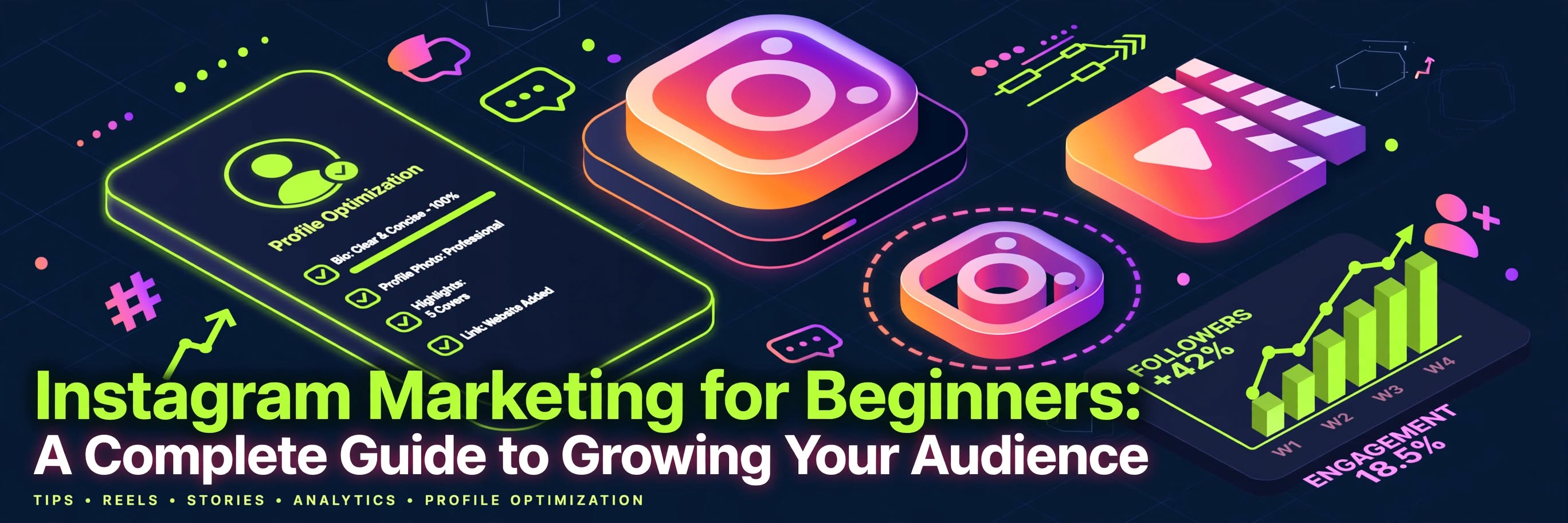
Instagram Marketing for Beginners: A Complete Guide to Growing Your Audience
Instagram Marketing for Beginners: A Complete Guide to Growing Your Audience
Introduction
Instagram has become an important platform for businesses, content creators, entrepreneurs, and digital marketers. With visual content, Reels, Stories, and interactive features, it offers multiple ways to introduce a brand, connect with an audience, and promote products or services.
However, building a successful Instagram presence requires more than simply publishing photos or videos. You need a clear strategy, consistent content, an understanding of your audience, and a way to measure your results.
In this beginner-friendly guide, you will learn how Instagram marketing works, how to optimize your profile, create engaging content, improve discoverability, and build a sustainable marketing strategy.
What Is Instagram Marketing?
Instagram marketing is the process of using Instagram to promote a business, product, service, personal brand, or content.
It can include organic activities, such as publishing Reels and posts, interacting with followers, and sharing Stories. It can also include paid advertising through Meta's advertising tools.
The main objectives of Instagram marketing may include:
- Increasing brand awareness.
- Reaching relevant audiences.
- Building relationships with potential customers.
- Driving traffic to a website.
- Generating qualified leads.
- Supporting product sales and customer retention.
The right objective depends on your business and audience. Defining your goal before creating content makes it easier to measure whether your efforts are effective.
1. Optimize Your Instagram Profile
Your Instagram profile is often one of the first places potential customers visit when discovering your business. A clear and professional profile helps visitors understand who you are and what you offer.
Choose a Recognizable Username
Use a username that is easy to remember, relevant to your brand, and consistent with your other social media accounts when possible.
Avoid unnecessary characters that make your account difficult to find.
Use a Clear Profile Picture
Businesses can use their logo, while personal brands may use a recognizable professional image. Make sure the image remains clear at a small size.
Write a Helpful Bio
Your bio should explain what you do, who you help, and what visitors can do next.
For example:
"Helping small businesses grow online through creative digital marketing. Explore our services and discover practical marketing tips."
Adapt the wording to reflect your actual business and services.
Add a Relevant Link
Use the website field to direct visitors to a relevant landing page, product page, booking page, or business website.
Check that the destination works correctly on mobile devices.
Use Professional Account Features
Consider using an Instagram professional account if its business or creator features suit your needs. Depending on account type and availability, these features may provide access to insights, contact options, and additional management tools.
2. Understand Your Target Audience
Effective Instagram marketing begins with understanding the people you want to reach.
Consider these questions:
- Who is your ideal customer?
- What problems are they trying to solve?
- Which topics interest them?
- What type of content do they prefer?
- What questions do they frequently ask?
- What would encourage them to trust your business?
For example, a clothing business may focus on product styling, sizing information, fabric details, and customer questions. A digital marketing agency may share practical tutorials, campaign insights, and educational content.
The more clearly you understand your audience, the easier it becomes to create useful content instead of publishing without a specific purpose.
3. Create a Balanced Content Strategy
A strong Instagram content strategy combines different types of content rather than repeating the same promotional message.
Consider these content categories:
Educational Content
Share tutorials, practical tips, checklists, and answers to common questions.
Educational content helps your audience understand a topic and gives them a reason to save or share a post.
Entertaining Content
Use relevant humor, relatable situations, storytelling, and creative videos to make your brand more memorable.
Keep the content appropriate for your audience and consistent with your brand identity.
Behind-the-Scenes Content
Show how your products are prepared, how your team works, or how a service is delivered.
Behind-the-scenes content can help people understand the people and processes behind a business.
Product or Service Content
Explain your products or services, their features, who they are designed for, and how interested customers can learn more.
Be accurate about pricing, availability, benefits, and limitations.
Customer-Focused Content
Answer frequently asked questions, explain common problems, and share genuine customer feedback when you have permission to do so.
A balanced content mix can help your account remain useful and interesting without making every post feel like an advertisement.
4. Use Instagram Reels Effectively
Reels can help businesses and creators present ideas through short-form video. Their discoverability depends on multiple factors, and reaching a large audience is never guaranteed.
To make useful Reels:
- Start with a clear idea that interests your target audience.
- Communicate the main point early.
- Use readable on-screen text when appropriate.
- Ensure the audio and visuals are clear.
- Focus on one useful tip, question, or story at a time.
- Create original content suited to your audience.
- Include a relevant call to action when it supports your goal.
For example, a digital marketing business could publish a short video explaining three common Instagram profile mistakes. A product business could demonstrate how a product works or answer a frequently asked question.
Avoid copying other creators' work without permission. Original, relevant content gives your brand a clearer identity.
5. Write Better Instagram Captions
A good caption provides context, communicates value, and helps readers understand what to do next.
A simple caption structure is:
Opening: Introduce a question, problem, or interesting idea.
Main message: Explain the key information in clear language.
Call to action: Invite the reader to take one relevant next step.
For example:
"Want to improve your Instagram content?
Start by understanding what your audience finds useful. Share practical tips, answer common questions, and review your account insights to identify which topics perform well.
Save this guide and use it when planning your next content calendar."
Keep captions relevant to the post. Avoid exaggerated claims, misleading promises, and unnecessary repetition.
6. Use Hashtags and Keywords Strategically
Hashtags and relevant words can help describe your content, but neither guarantees reach or ranking.
Use natural language in your captions and include terms that accurately reflect the topic of your post.
For example, a post about Instagram marketing might naturally mention:
- Instagram marketing
- Social media strategy
- Content creation
- Digital marketing tips
- Audience engagement
When relevant, use a small selection of descriptive hashtags rather than adding a long list of unrelated tags.
Focus on relevance and usefulness. Do not assume that a particular hashtag count will automatically improve performance, because platform features and recommendations can change.
7. Maintain a Consistent Posting Schedule
Consistency helps you develop a recognizable presence and gives you opportunities to learn what your audience prefers.
You do not need to publish several times every day to begin.
Start with a realistic schedule that fits your available time and resources. For example, you might publish three quality posts per week and share Stories when you have something useful or relevant to communicate.
Review your performance and adjust the schedule as you learn more about your audience.
A content calendar can help you organize topics, formats, publishing dates, captions, and creative assets in advance.
8. Improve Audience Engagement
Instagram marketing is not only about publishing content. It also involves building relationships with the people who interact with your account.
Practical ways to encourage genuine engagement include:
- Responding to relevant comments.
- Answering customer questions clearly.
- Using interactive Story features when appropriate.
- Asking meaningful questions in captions.
- Participating in relevant conversations.
- Acknowledging genuine feedback.
- Creating content based on recurring audience questions.
Avoid spam, misleading engagement tactics, and unsolicited repetitive messages.
Meaningful interactions can help you understand your audience and improve the quality of your content over time.
9. Use Instagram Insights to Measure Performance
Publishing content without reviewing its performance makes it difficult to understand what is working.
Where available, use Instagram Insights or other appropriate analytics tools to monitor relevant metrics.
Reach
Reach indicates how many unique accounts saw your content, according to the platform's metric definition.
Views and Plays
These metrics help you understand how video content is being consumed. Their definitions may differ by content type and platform updates.
Engagement
Review relevant interactions, such as likes, comments, saves, and shares.
Profile Activity
Check whether content encourages people to visit your profile or take other available actions.
Website Clicks and Conversions
If your goal is to generate website traffic or sales, measure link clicks and meaningful conversions where tracking is available and configured correctly.
Do not judge success using one metric alone. A post with fewer views may still attract valuable inquiries or relevant website visitors.
Compare similar content over time and use the results to improve your strategy.
10. Consider Instagram Advertising
Organic content is not the only way to promote a business on Instagram. Eligible businesses can also explore paid advertising through Meta's advertising tools.
Depending on campaign objectives and available features, advertising may help businesses reach selected audiences, promote products, generate leads, or drive website visits.
Before launching a campaign:
1. Define a specific objective.
2. Identify an appropriate audience.
3. Prepare creative assets that suit the placement.
4. Set a budget you can afford.
5. Ensure your landing page works properly.
6. Configure suitable tracking where possible.
7. Review results and adjust the campaign based on evidence.
Advertising does not guarantee sales or positive returns. Results depend on the offer, audience, creative quality, competition, landing page, and other factors.
Start with a clear measurement plan rather than increasing spending simply because a campaign receives likes or views.
11. Common Instagram Marketing Mistakes to Avoid
Beginners often make avoidable mistakes when developing their accounts.
Posting Without a Clear Goal
Every post does not need to sell something, but your overall content strategy should have a purpose.
Focusing Only on Follower Numbers
A large follower count does not automatically translate into relevant engagement, customer trust, or sales.
Focus on reaching the right people and measuring outcomes that matter to your objectives.
Ignoring Audience Questions
Questions and feedback can reveal what your audience wants to understand. Use these insights to create more helpful content.
Using Misleading Claims
Avoid promising guaranteed results, unrealistic business outcomes, or benefits you cannot substantiate.
Neglecting Analytics
Reviewing performance helps you understand which topics and formats deserve further attention.
Ignoring Account Security
Use a strong, unique password and enable available security protections. Never share verification codes with third parties.
Copying Content Without Permission
Develop your own ideas and creative assets, or ensure you have the necessary rights to use third-party material.
Avoiding these mistakes creates a stronger foundation for sustainable Instagram marketing.
12. A Simple 30-Day Instagram Marketing Plan
If you are new to Instagram marketing, use this four-week framework to organize your efforts.
Week 1: Build Your Foundation
- Optimize your profile and bio.
- Define your target audience.
- Choose a clear marketing objective.
- Research relevant audience questions.
- Prepare your first content calendar.
Week 2: Publish Useful Content
- Share educational posts.
- Experiment with relevant Reels.
- Publish content that answers common questions.
- Use clear captions and relevant keywords.
- Respond to genuine comments and messages.
Week 3: Improve Engagement
- Review audience feedback.
- Create content around frequently asked questions.
- Experiment with different relevant formats.
- Share appropriate behind-the-scenes content.
- Review available account insights.
Week 4: Measure and Refine
- Identify your most useful or effective content.
- Compare performance against your original objective.
- Review profile activity and relevant conversions.
- Identify topics that deserve more attention.
- Plan the next month's content based on your findings.
This is a starting framework, not a guarantee of growth. Adapt it to your business, resources, and audience.
Frequently Asked Questions
How can beginners start Instagram marketing?
Begin by optimizing your profile, defining your target audience, choosing a marketing objective, and publishing useful, relevant content consistently.
How often should I post on Instagram?
There is no single schedule that works for every account. Start with a realistic publishing frequency and adjust it using audience feedback and performance data.
Do hashtags guarantee more reach?
No. Hashtags may help describe content, but they do not guarantee visibility or engagement.
Are Instagram Reels important for marketing?
Reels are one useful content format for sharing short videos and reaching potential audiences. Their effectiveness depends on the content, audience, and other factors.
Should a business use Instagram advertising?
Advertising may be appropriate when a business has a clear objective, a suitable offer, an appropriate audience, and a plan for measuring results.
How can I measure Instagram marketing success?
Choose metrics based on your objective. These might include relevant engagement, profile activity, website visits, qualified inquiries, or conversions.
Can follower growth guarantee more sales?
No. Sales depend on many factors, including customer needs, product quality, pricing, trust, and the buying experience.
Conclusion
Instagram marketing is most effective when it is approached as an ongoing process of understanding your audience, creating valuable content, building genuine relationships, and learning from performance data.
Start with a clear objective, optimize your profile, experiment with relevant content formats, and measure the results that matter to your business.
Avoid shortcuts that promise guaranteed growth, and prioritize authentic engagement, responsible marketing, and account security.
At SMMMarkets, we believe that informed decisions and a clear marketing strategy are important parts of exploring social media services. Review the available options carefully and choose an approach that aligns with your goals, budget, and the applicable platform policies.
Ready to improve your social media marketing knowledge? Continue exploring the SMMMarkets blog for practical guides, marketing insights, and helpful resources for your digital growth journey.